Grey Zone
School project
Grey Zone is a linear, third-person horror-adventure level inspired by The Last of Us. Created in Unreal Engine 5, it features four distinct gameplay phases that explore key level design principles such as: Affordance, Attractive Openings, Leading Lines, Landmarks, Intensity, Verticality, and Lighting.
Grey Zone
School project
Grey Zone is a linear, third-person horror-adventure level inspired by The Last of Us. Created in Unreal Engine 5, it features four distinct gameplay phases that explore key level design principles such as: Affordance, Attractive Openings, Leading Lines, Landmarks, Intensity, Verticality, and Lighting.
Project details
– Use of ALGS v1.4.2 (Adventure Game Locomotion System), Blocking Starter Pack, and the Conifer Forest Pack to support the Level Design
Workflow
Furthermore, these meetings helped me plan my work effectively, as I had to meet the deadlines set for each week with my teacher.
Pre-production

Analysis and references
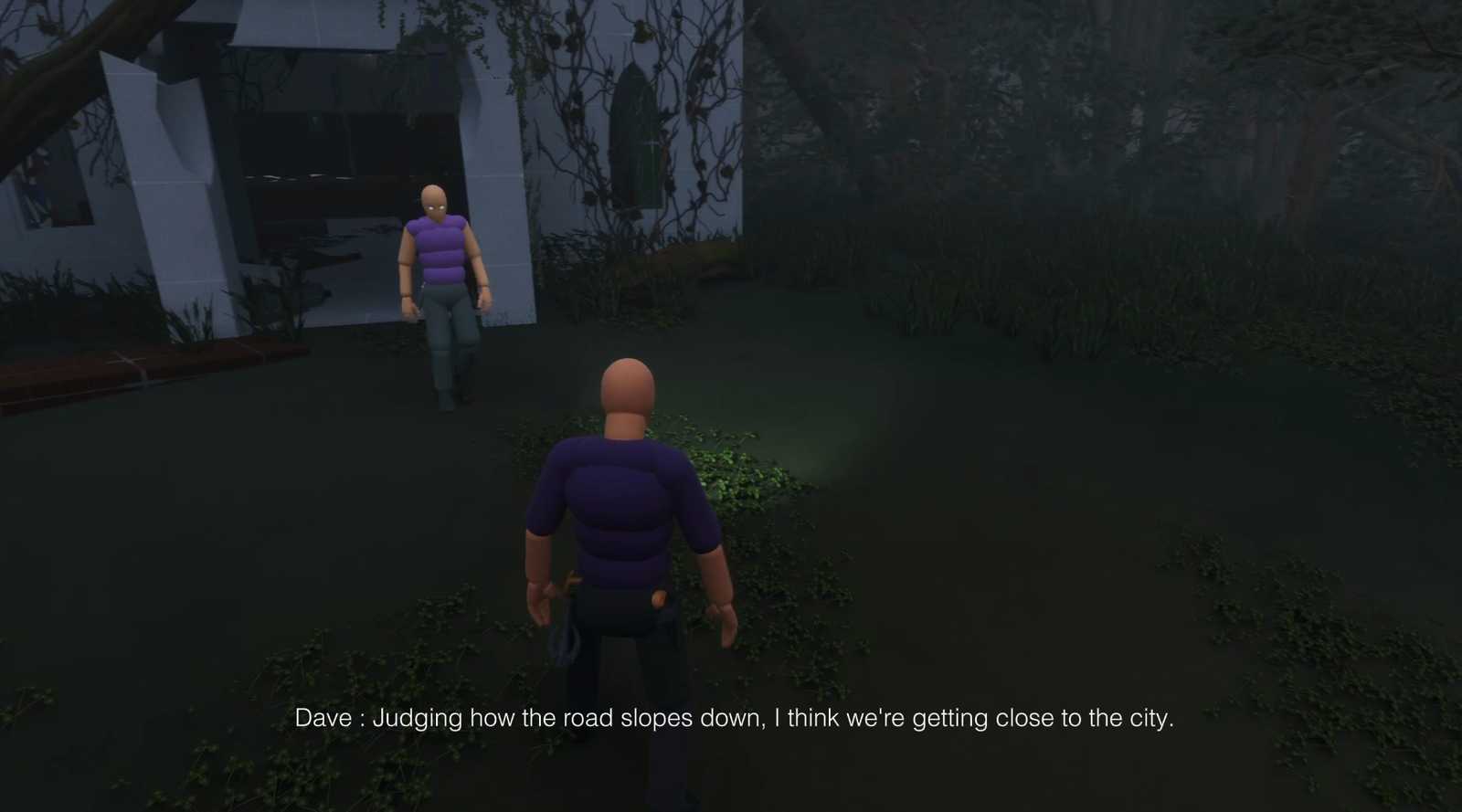
To enhance realism and Immersion, I also added an AI companion from the ALGS template to simulate dialogue – a nod to the narrative focus of
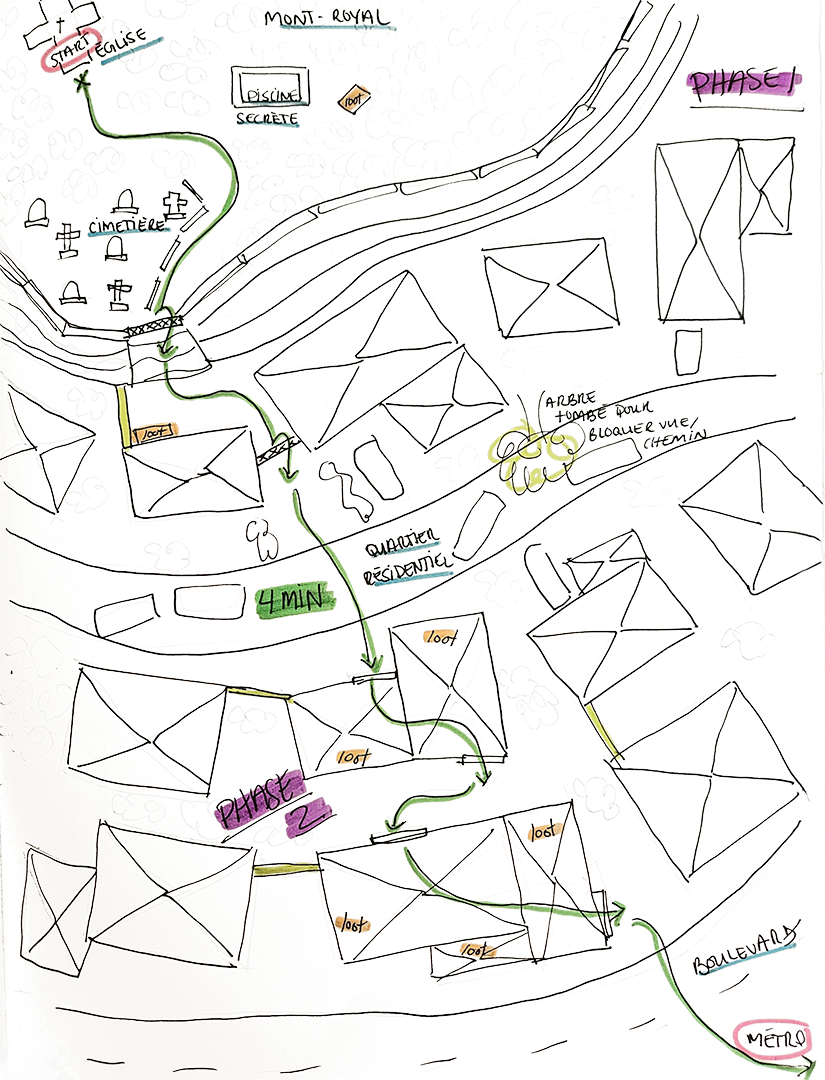
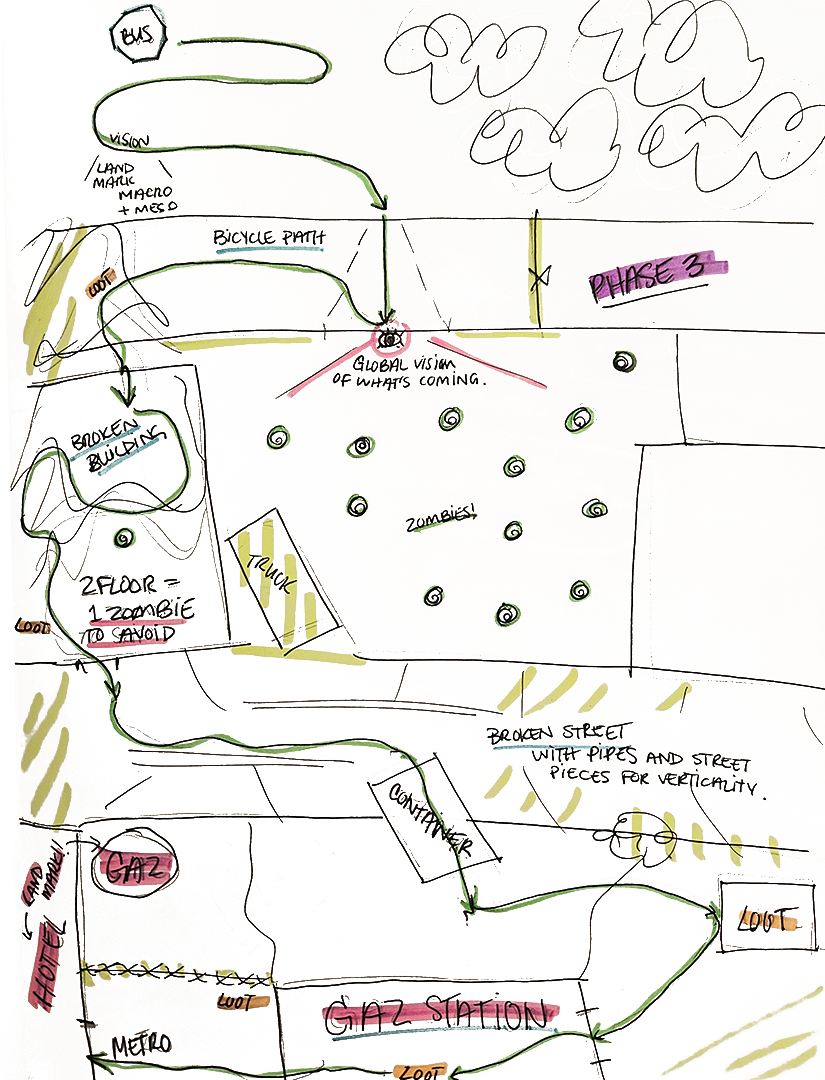
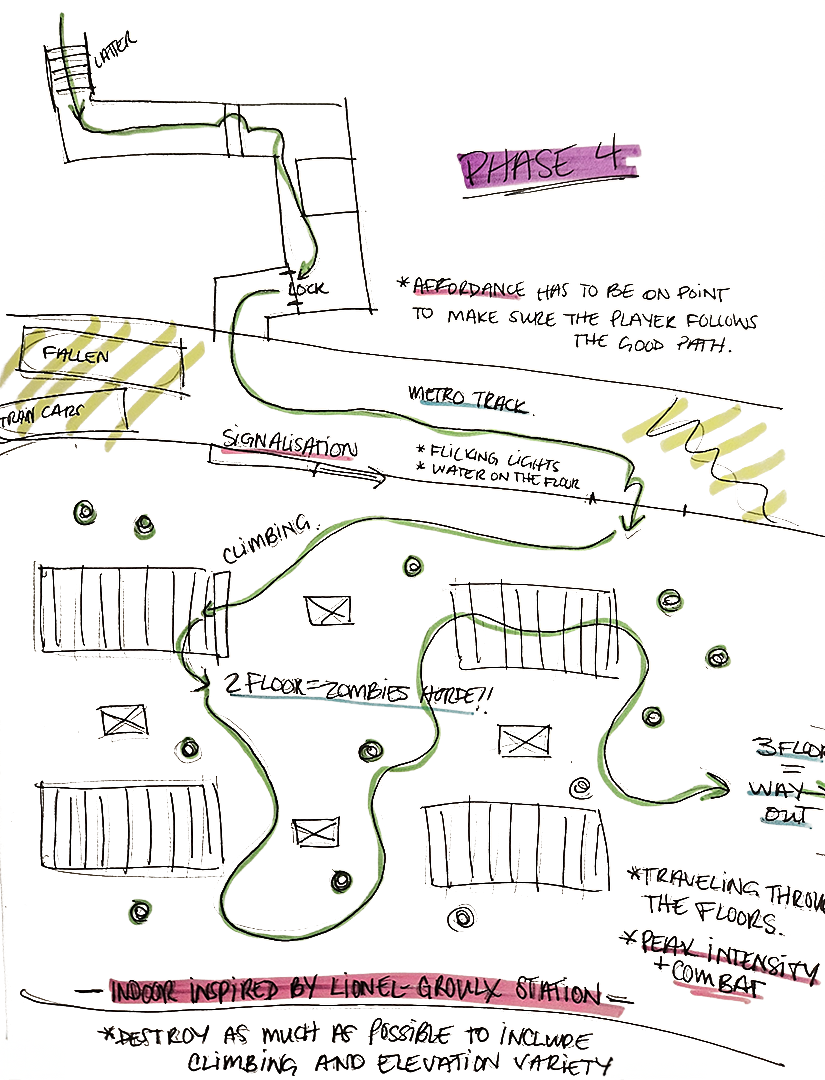
Preliminary sketch
For this project, I wanted the environment to constantly evolve, offering new visual and spatial experiences. Inspired by Montreal, I focused on transitions between nature, suburbs, city, and metro. Balancing indoor and outdoor areas was key to maintaining rhythm and variety throughout the Level.


Final product
The final version of Grey Zone ended up being more extensive than I initially planned, but it allowed me to explore a wide range of gameplay dynamics and do a varied environment.
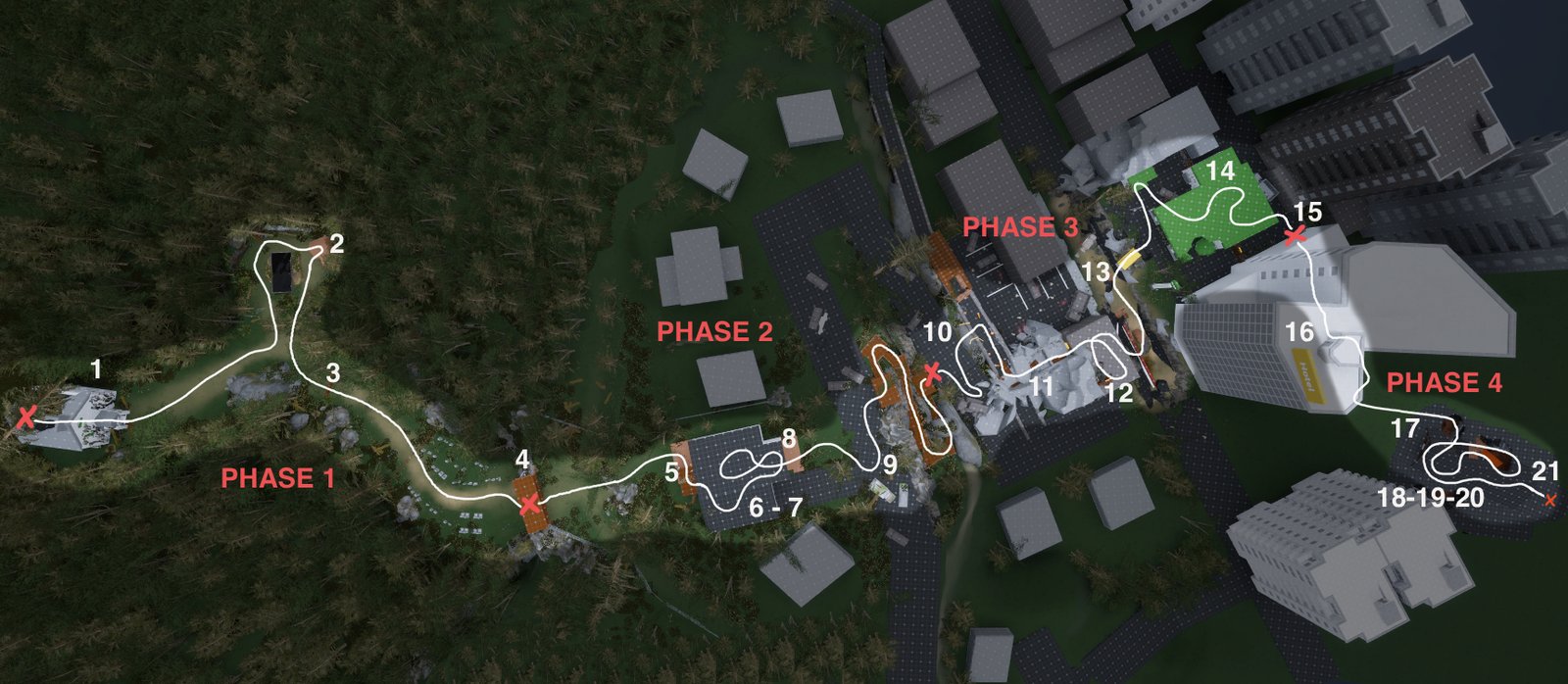
Final product
The final version of Grey Zone ended up being more extensive than I initially planned, but it allowed me to explore a wide range of gameplay dynamics and do a varied environment.
Level Walkthrough

1 - Introduction to the Level
3 - Exit from the forest
2 - Looting reward
4 - Reveal towards the next phase

5 - Entry into the house
7 - Soft increased intensity
9 - Affordance / deny of affordance
6 - Looting and interactions
8 - Landmark macro Reveal

11 - Bypass enemies
13 - Transition to the gas station
15 - Metro access
10 - First zombies introduction
12 - Don't get caught
14 - Safe looting to release tension

17 - Increased stress
19 - Mandatory fight
21 - Arrival at the generator
16 - Transition to the metro
18 - Peak of Intensity
20 - Escape from the horde
Level Walkthrough
PHASE 01
Set in the forest, the Level begins in an abandoned church – suggesting the end of a previous chapter. In the very first seconds, the player is introduced on the mission of the Level.
This phase emphasizes movement and contemplation. The first minutes are exploration-focused, allowing the player to absorb the environment and build tension gradually.
1 - Introduction to the Level
2 - Looting reward
3 - Exit from the forest
4 - Reveal towards the next phase
PHASE 02
The main challenge here was
balancing Affordance: guiding the player through blocked streets without visual repetition. To reward curiosity, I placed simple loot in obstructed areas.
5 - Entry into the house
6 - Looting and interactions
7 - Soft increased intensity
8 - Landmark macro Reveal
9 - Affordance / deny of affordance
PHASE 03
As the mission’s destination lies in the metro beneath the hotel, I ensured the hotel remained visible from most key viewpoints, reinforcing direction and anticipation.
This city phase marks a rise in Intensity – it’s the first encounter with zombies. The player must stealthily navigate from the streets to a broken building without being detected. At the end of the phase, the characters split to continue the mission on their own.
10 - First zombies introduction
11 - Bypass enemies
12 - Don't get caught
13 - Transition to the gas station
14 - Safe looting to release tension
15 - Metro access
PHASE 04
Now alone, with no help, the final phase delivers the peak of Intensity. The stress is built through music, Lighting, and Combat – the first and only one of the Level. In the metro, the player faces an unexpected zombie horde and must fight through to reach the upstairs generator, the mission’s main goal.
16 - Transition to the metro
17 - Increased stress
18 - Peak of Intensity
19 - Mandatory fight
20 - Escape from the horde
21 - Arrival at the generator
Level intensity

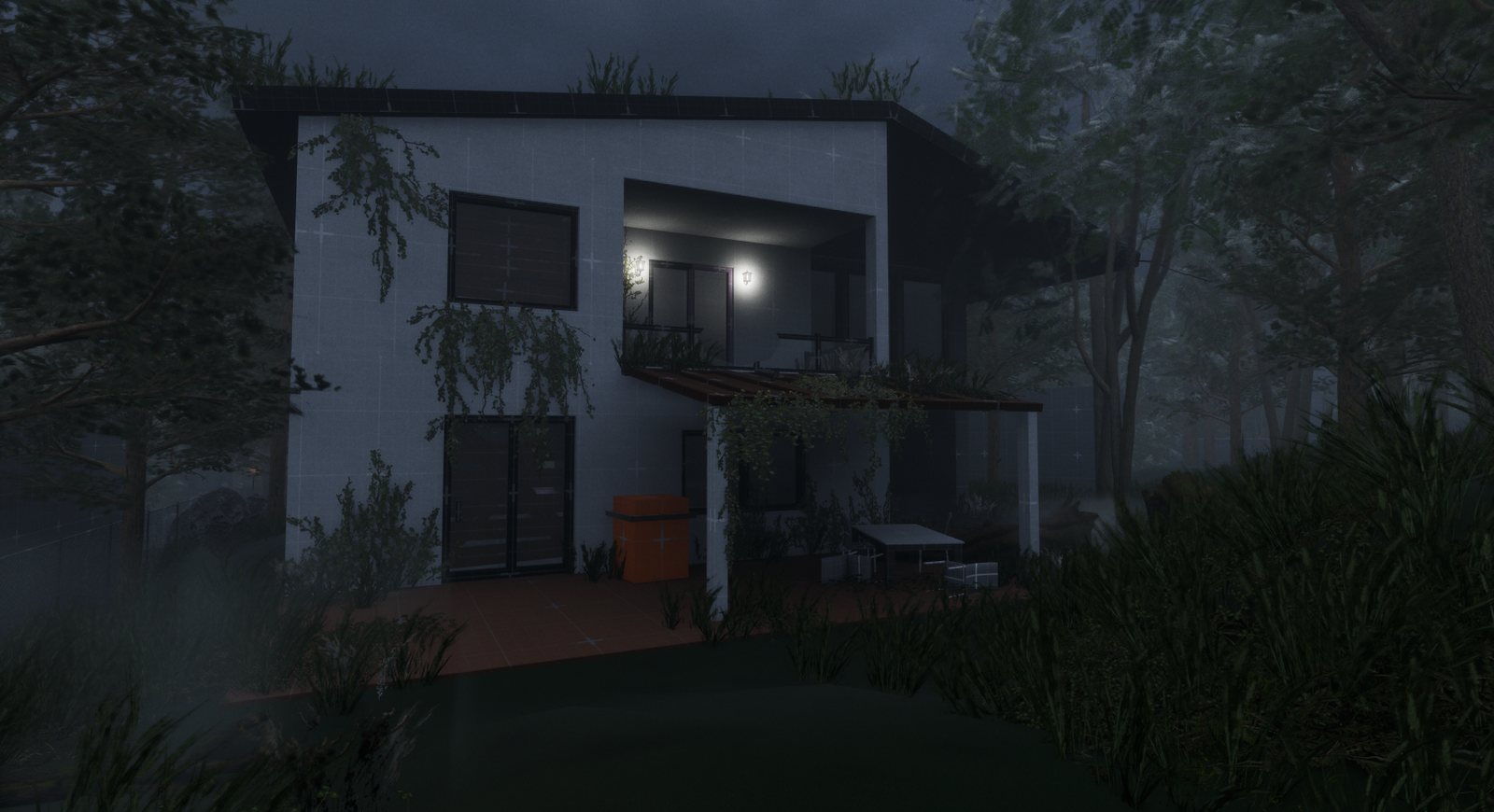
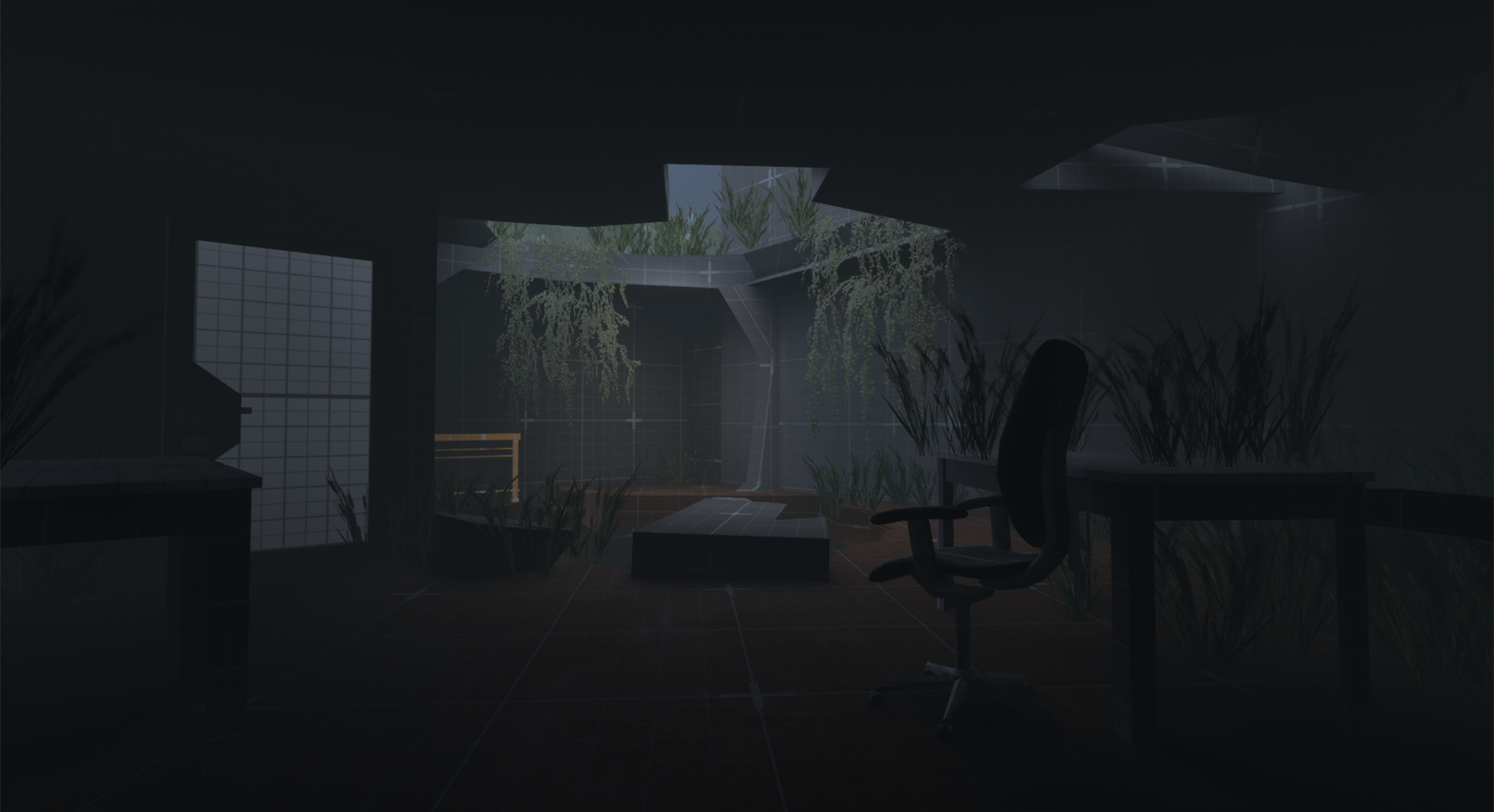
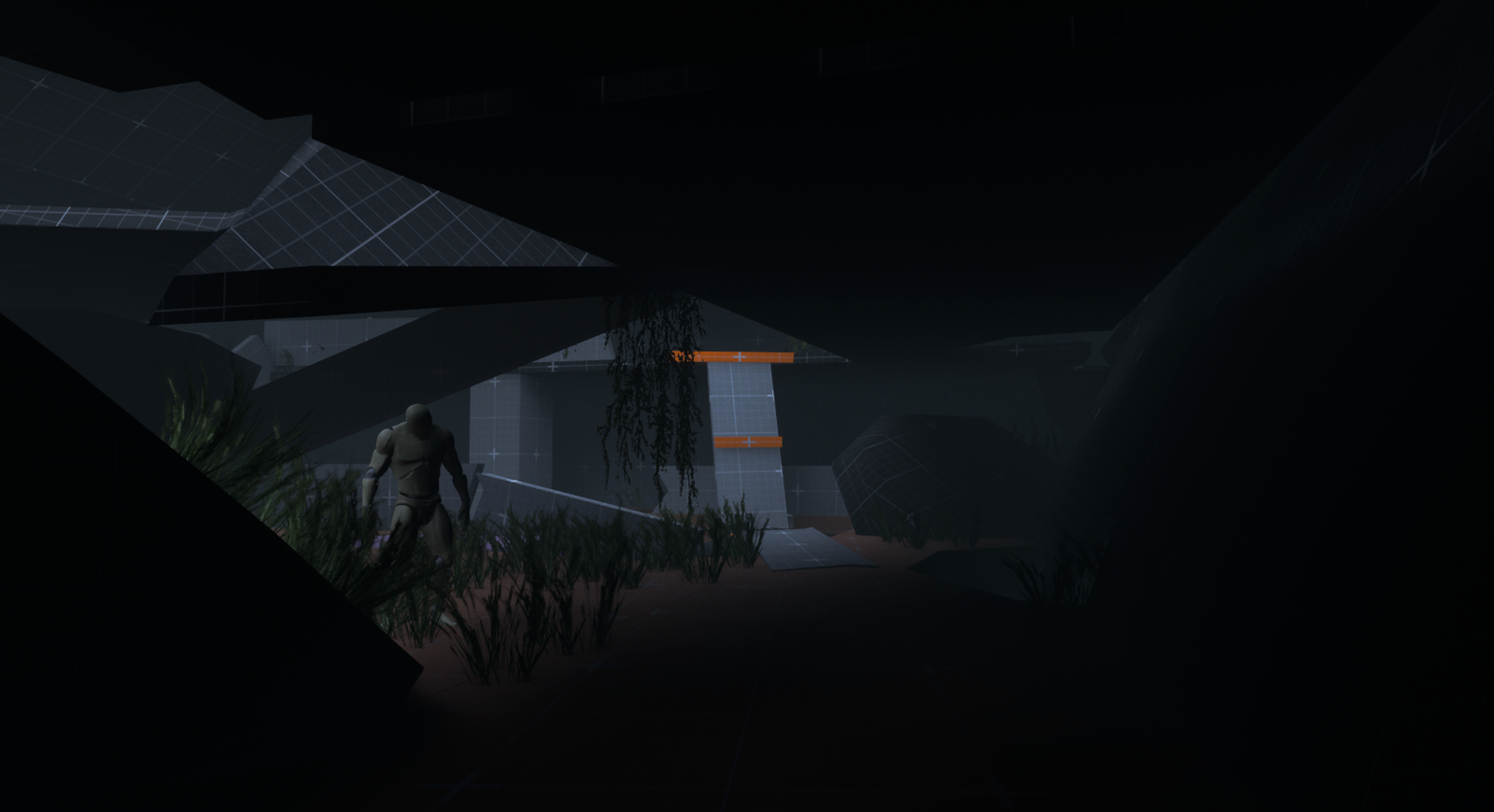
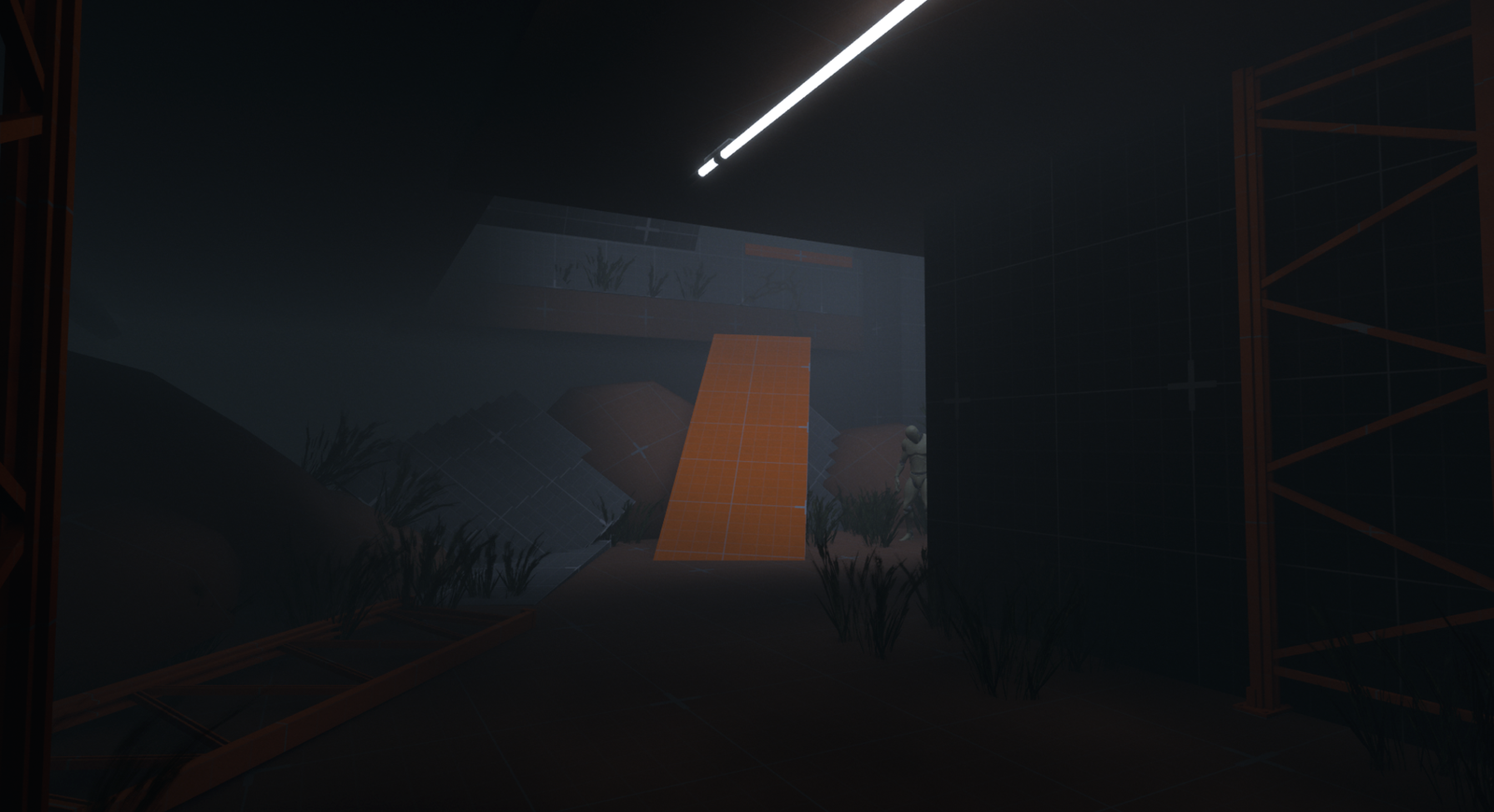
Affordance
As a semi-linear Level, clear affordance was essential to maintain the Golden Path.
I combined multiple Affordance techniques to subtly guide the player, such as: distinct colors, Breadcrumbs, Lights, Attractive Openings and Leading Lines.
Deny affordance
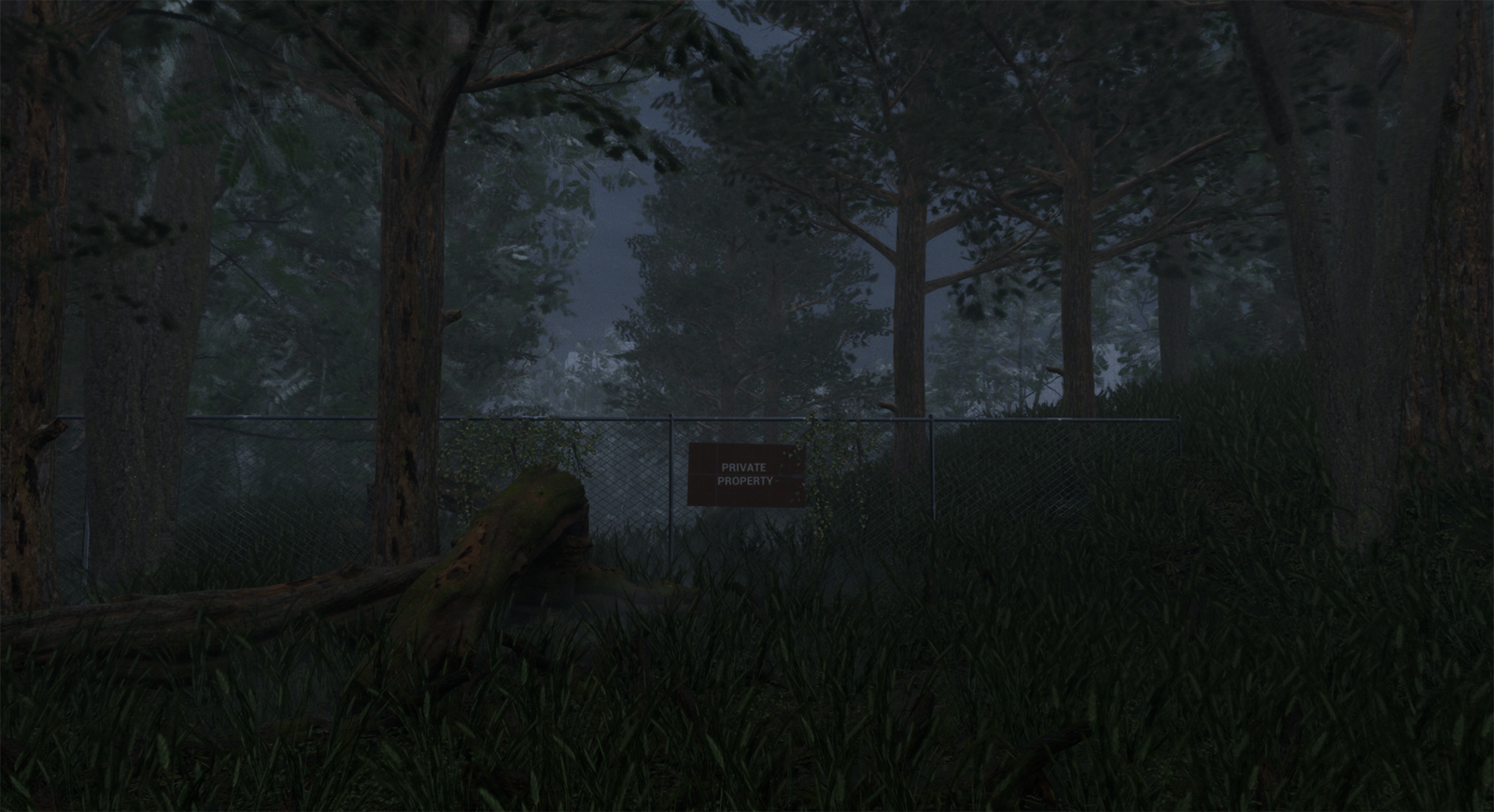
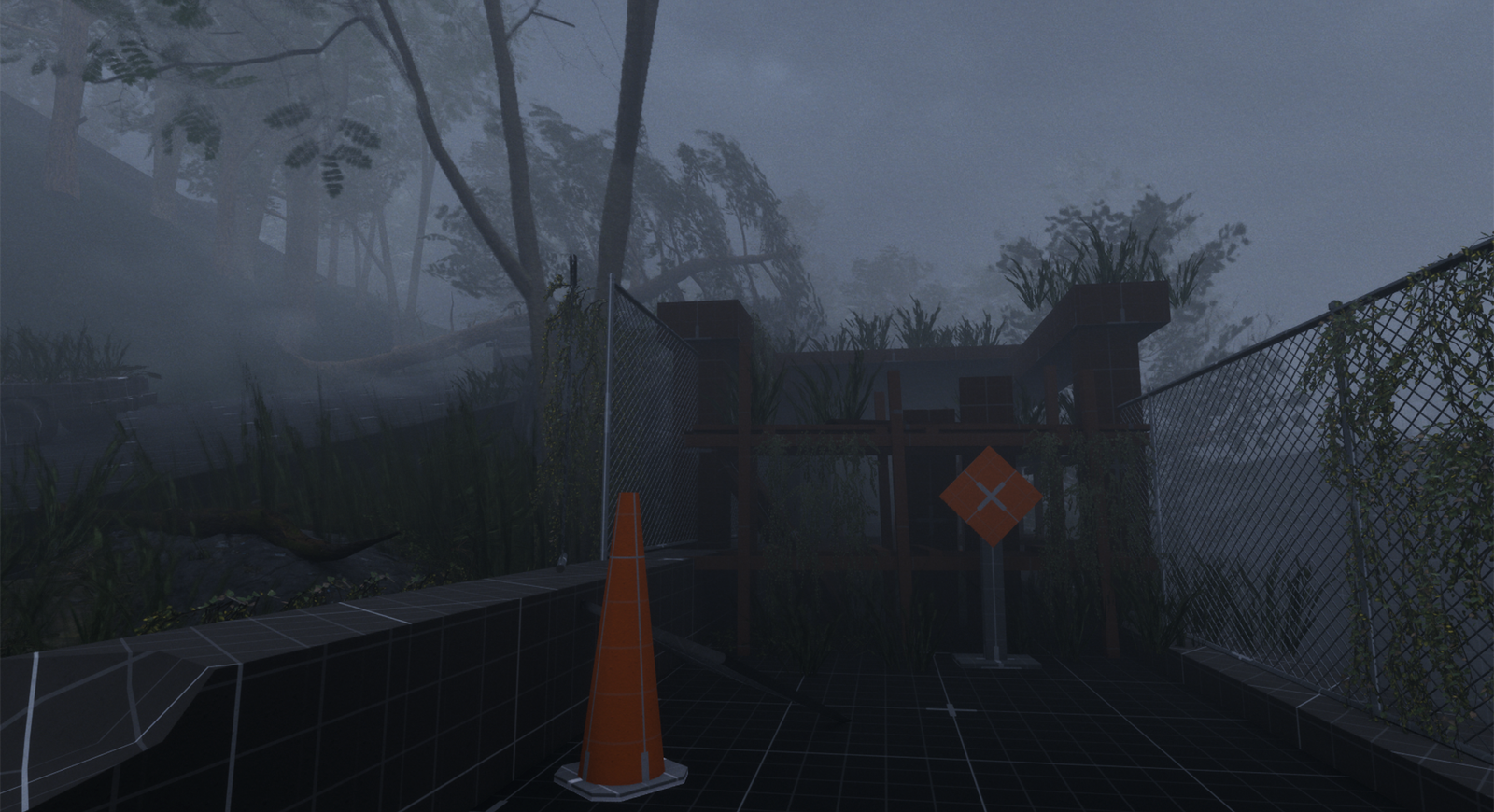
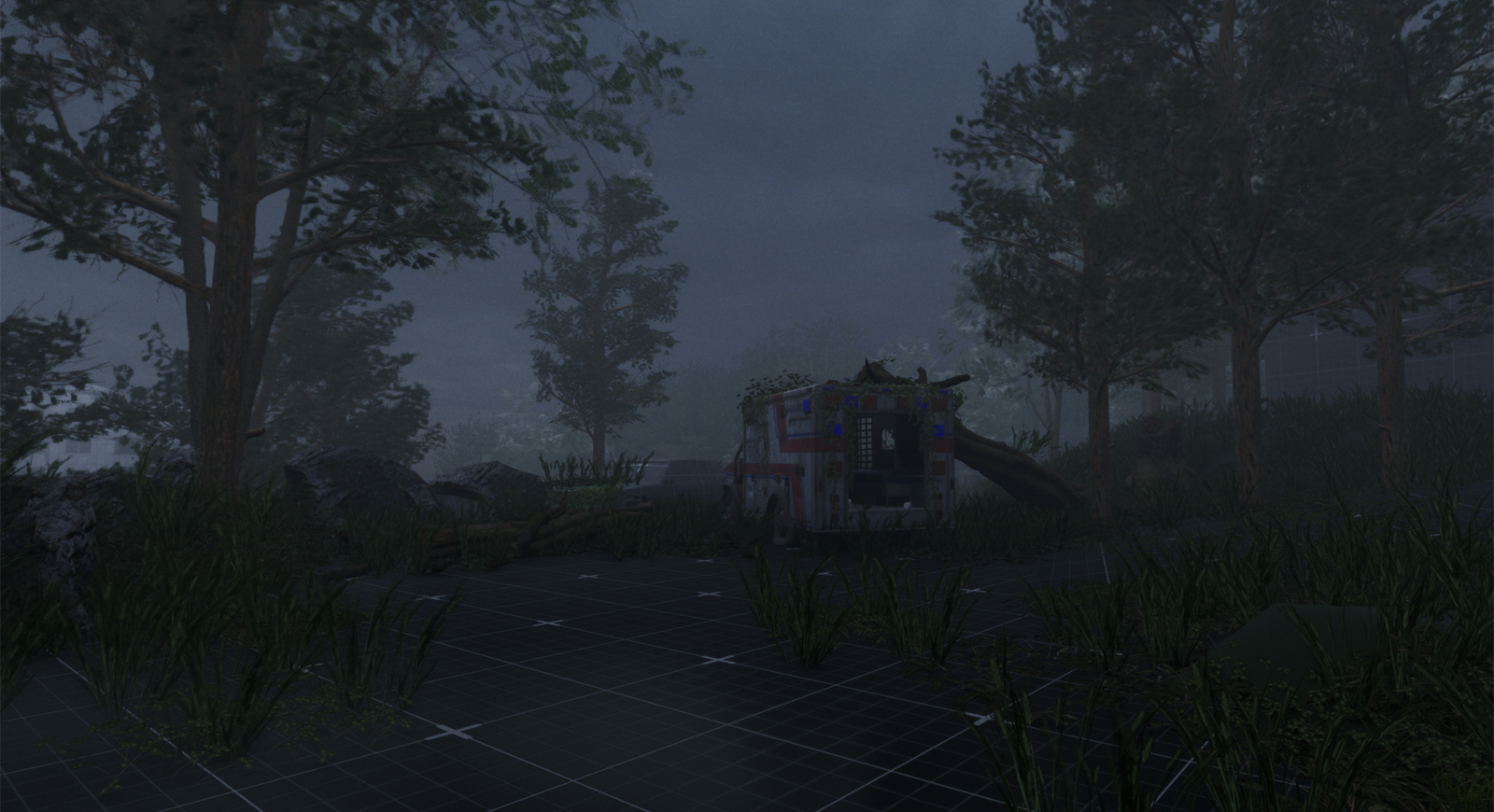
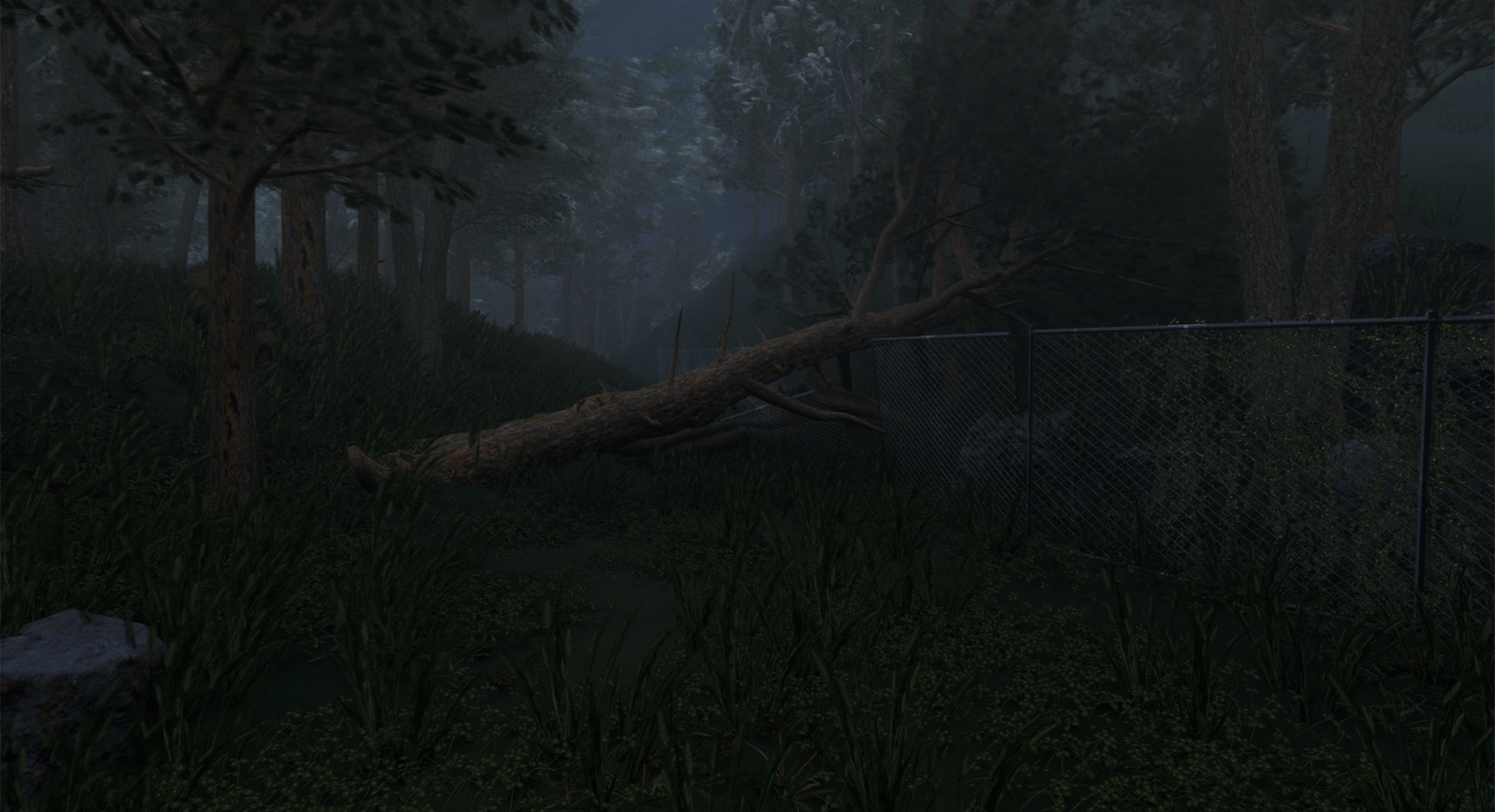
To block access convincingly, I used meshes, signs, and foliage.
One major challenge was keeping these visual barriers varied to avoid repetition.
Landmarks
They also serve like Reveals, to give the player visual rewards.
Even at the blockout stage, I refined important Landmarks to ensure clarity for future environment art production.


Reveals
upcoming environments and Level transitions.


Attractive openings
Attractive Openings, using affordance cues, helped guide the player along the Golden Path without feeling forced or linear.
Leading Lines
Environmental elements, colors and props were placed to create natural Leading Lines, subtly directing the player’s attention and movement.


Verticality
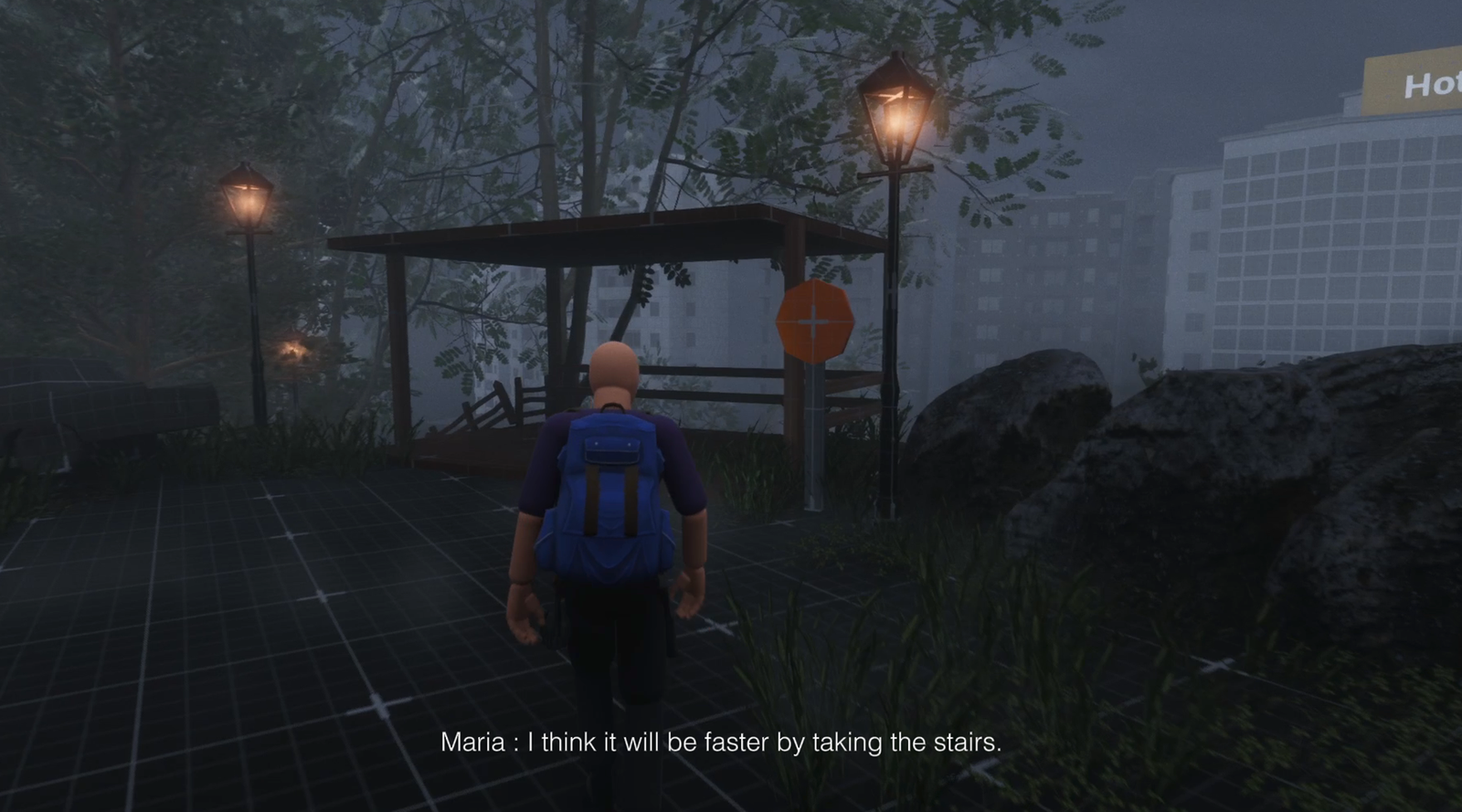
Since the path descends toward the metro, maintaining variety in elevation was essential.
I integrated climbable and elevated areas to balance downhill moments with upward traversal.
Lighting
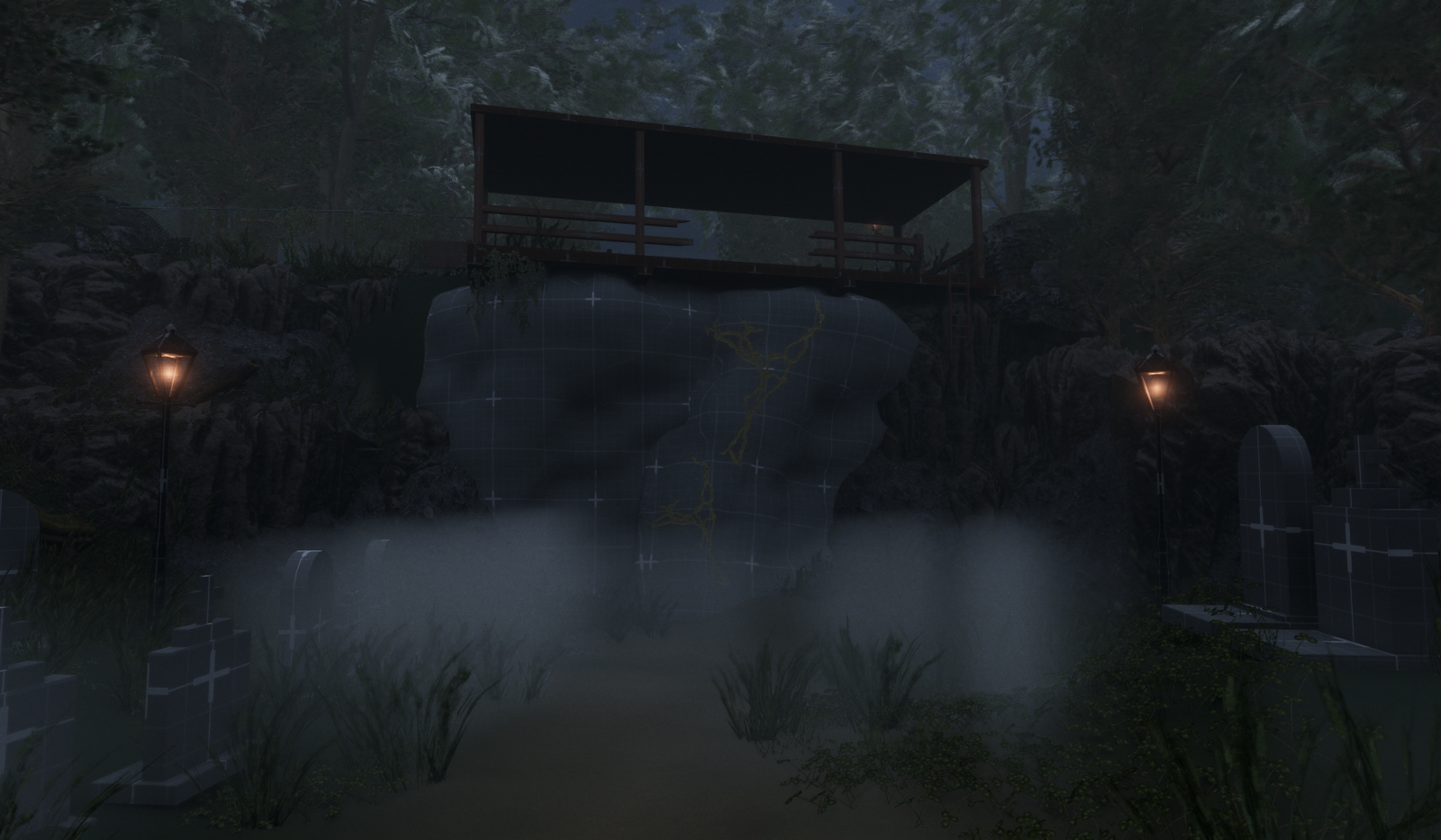
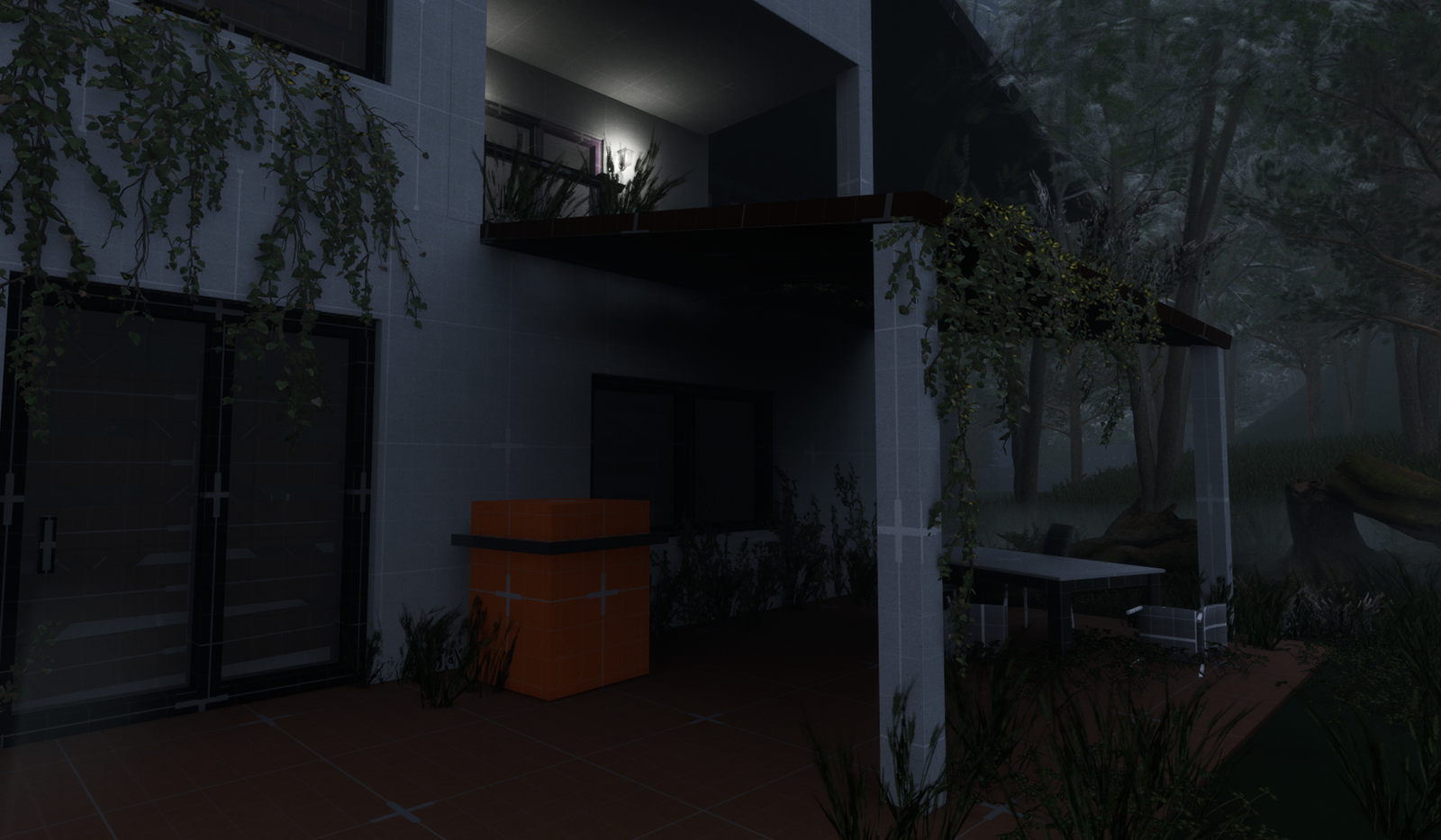
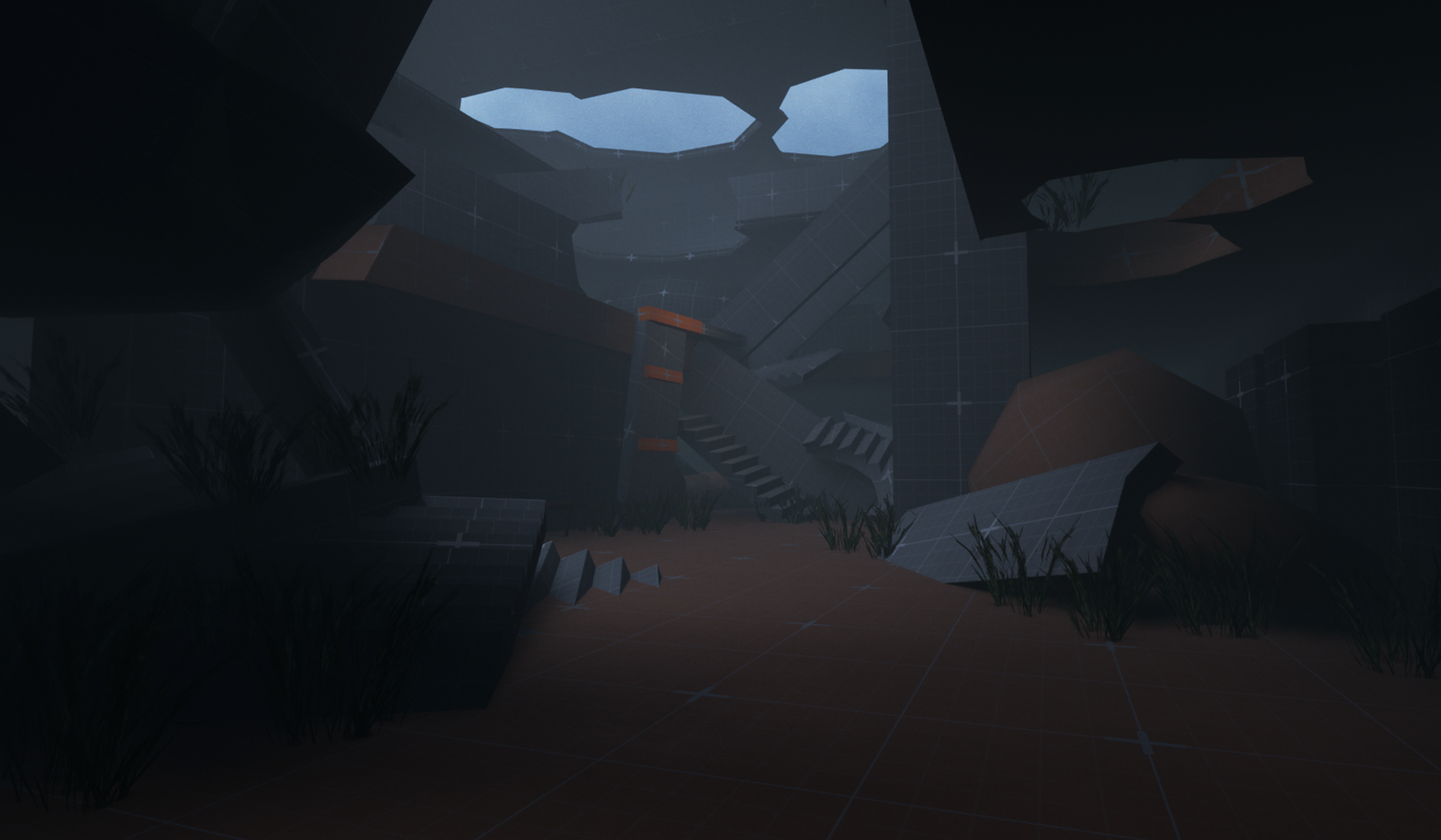
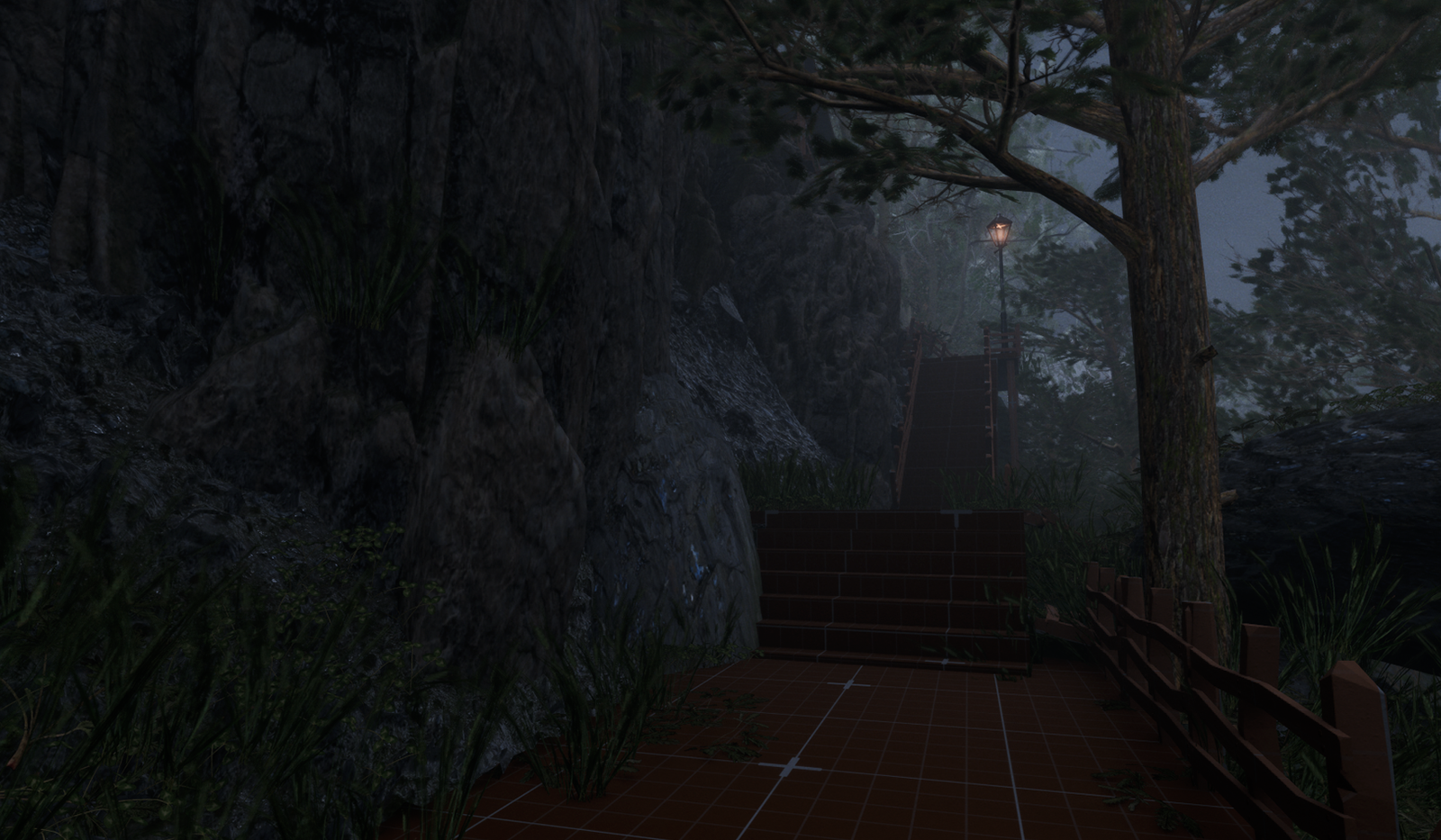
Lighting played a major role in establishing a foggy, eerie, midnight atmosphere.
Through multiple Post-Process Volumes, Exponential Fog, Sky Sphere and Directional Light,
I achieved both mood and gameplay clarity.
Even if the project is in a post-apocalyptic world,
artificial lights were still used to support affordance and guide the player visually.


Narrative Lines
Remembering that the Level is inspired by The Last of Us, narrative moments were added to enrich slower sections and deliver mission context, keeping the story simple yet engaging.
Enemies
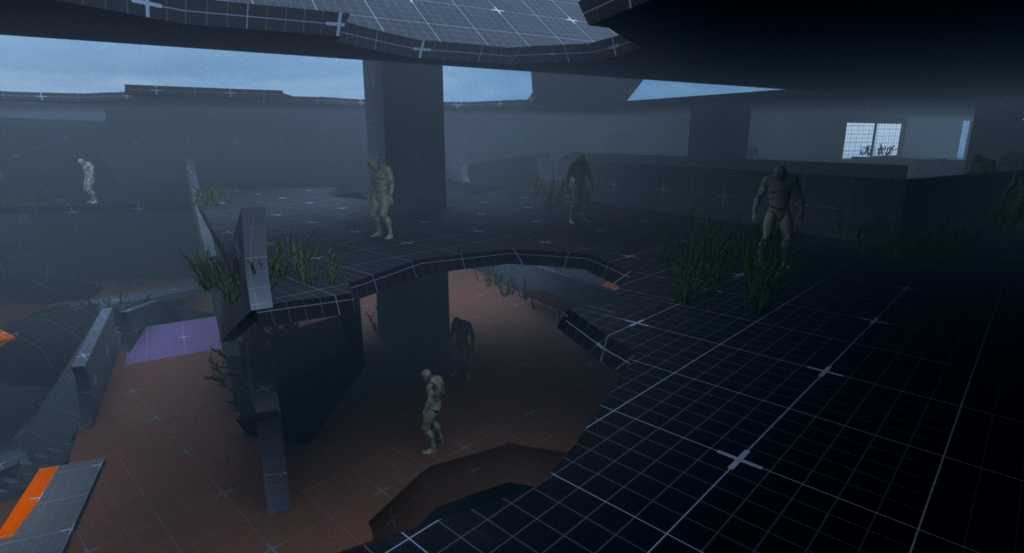
A horror game inspired by The Last of Us naturally needed enemies. To keep a balance between exploration, looting, and movement, I avoided overpopulating the level with combat. Enemy placement was strategic, building tension progressively through each phase and culminating in the final one – where the highest concentration of enemies delivers the Level’s climax of Intensity.



Strategic loot placement
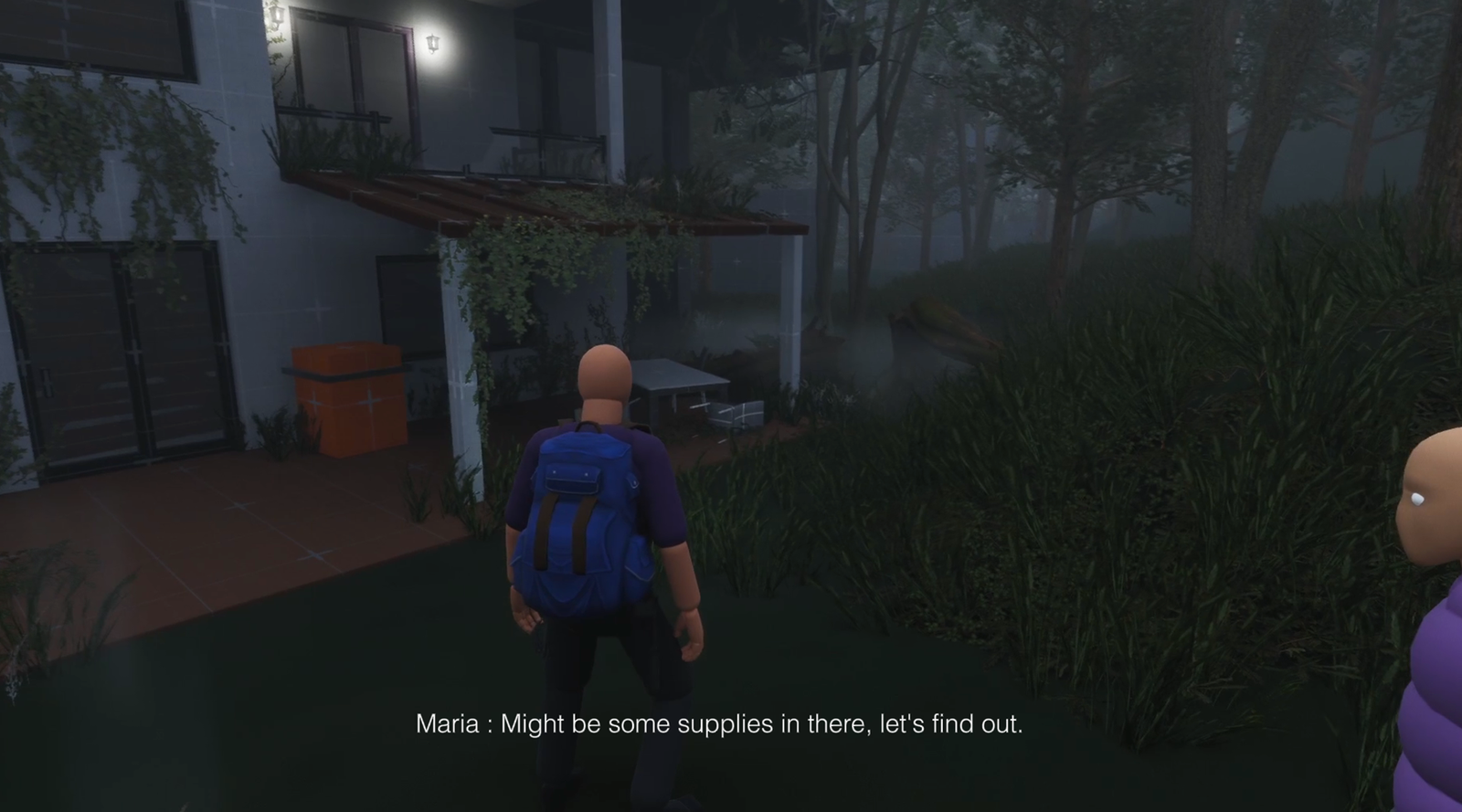
Exploration is rewarded through optional side paths containing important loot.
The essential resources – like ammo and meds – are placed directly along the Golden Path to ensure that the player doesn’t miss them.
Breadcrumbs
In the suburban house, I placed corpses to gradually increase tension and foreshadow upcoming encounters, serving as both narrative cues and gameplay breadcrumbs.

Conclusion
Grey Zone is a The Last of Us inspired level with a stronger horror twist. My goal was to demonstrate AAA Level Design skills and create an immersive, cohesive environment.
Over 7 weeks, I applied core Level Design techniques, refined my sense of Pacing, and learned how to balance Gameplay, narrative, and mood – all within a short, polished experience.
With its Crafted Intensity Curve, environmental transitions, and solid structure, this project stands as the project I’m most proud of from my first year into the Video Game Design world.